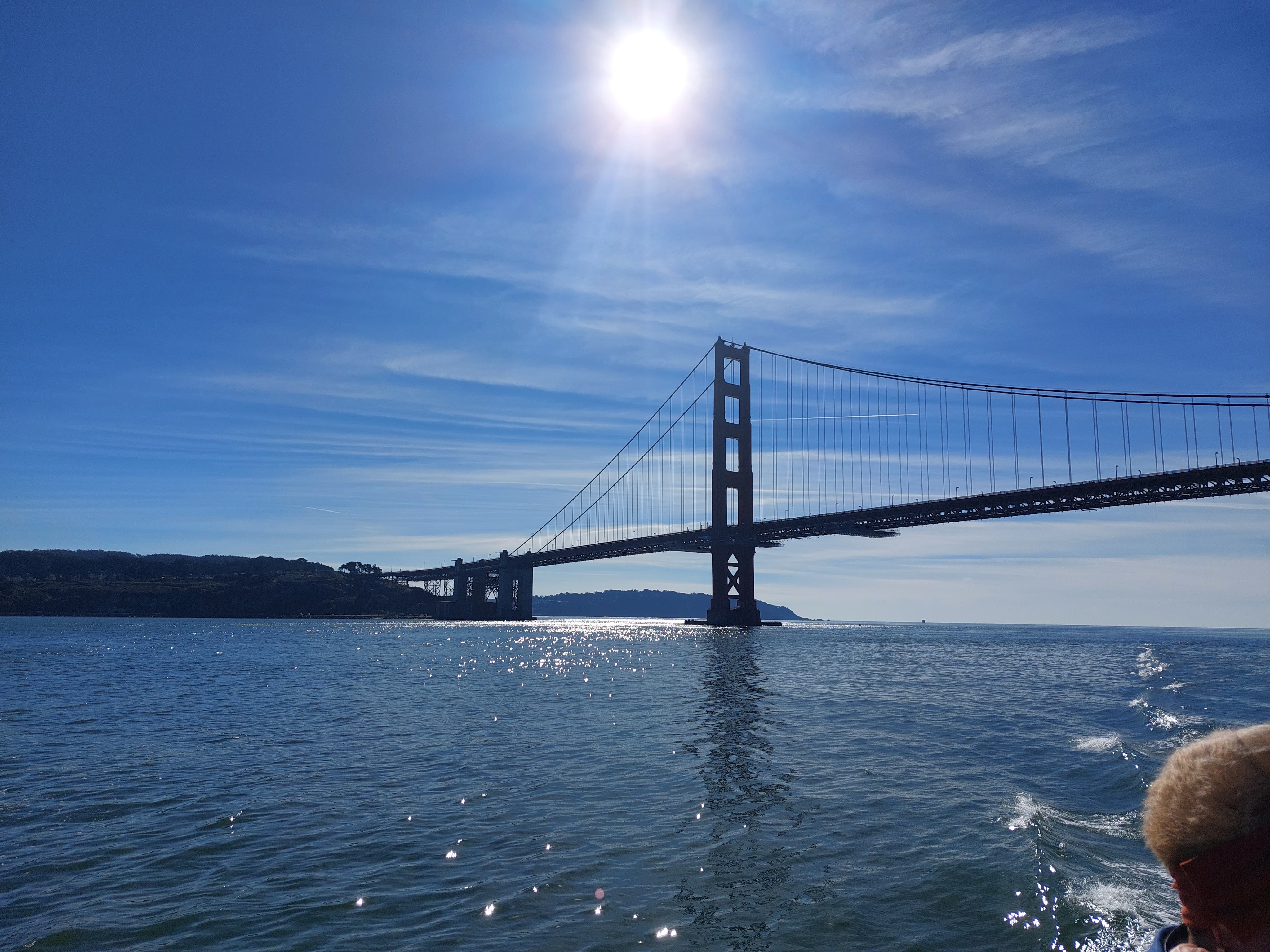
It was the eve of St. Patrick’s Day 2002 and San Francisco was preparing for its traditional parade, already one of the largest in the United States, made more poignant that year by the invitation to a group of firefighters from New York City, along with other first responders, who had worked heroically, and at great personal risk, and indeed, loss to themselves, in the aftermath of the fall of the Twin Towers six months before.
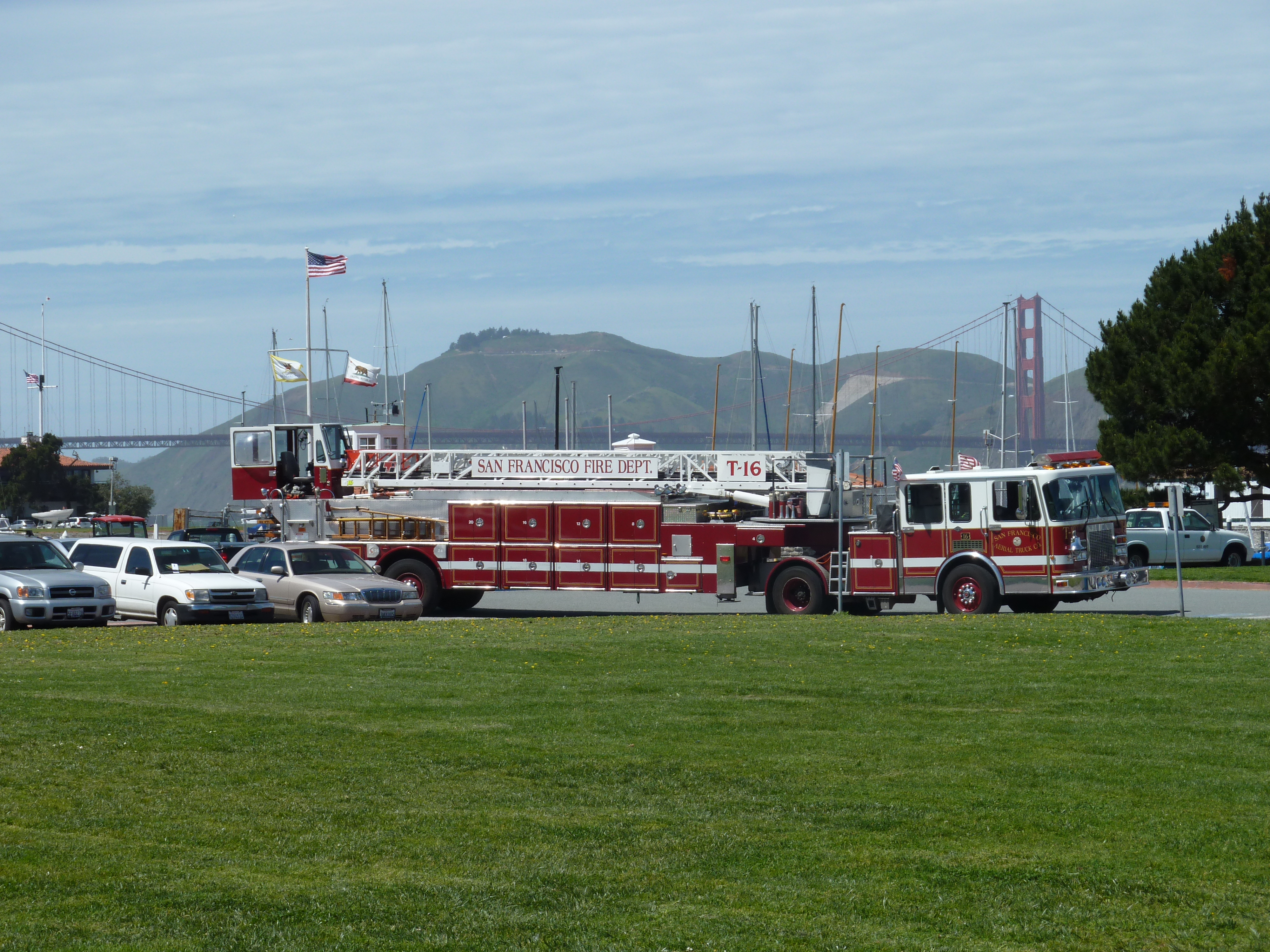
Shortly after midnight, as I was channel hopping in our bedroom of the Holiday Inn, Fisherman’s Wharf, our preferred resting place in those years before we switched to apartment living, when I stumbled across a live broadcast from the building opposite, next to the Cannery Building, once the largest fruit and vegetable cannery in the world, which was ablaze. Given its proximity, we were surprised that there had been no alarm in the hotel itself. We dressed and went down to the lobby to see what was happening.
The stench of smoke, combined with the honking of fire engines (that sound still makes me shudder to this day) on the scene revealed a major conflagration. A single firefighter appeared to be suspended high in the sky on the top of a long ladder set at around forty-five degrees. He was hosing the roof of the building which was aflame. There were several dozen people observing and, inevitably, taking photos and videos of the “show”.
However, it seemed that that the fire was controlled and that our hotel, though only a few steps across the road, was not in danger, hence the decision not to evacuate. Not being of a rubber necking inclination, we decided to return to our room and monitor events on the live local TV stream. But on passing through the entrance, we witnessed groups of people, luggage clearly packed in a blind panic, fleeing the building and heading in the direction of North Beach. Nerves were still raw from 9/11, but such behaviour was nonetheless extraordinary.
Following on from our ordeal travelling a week or so earlier from San Francisco to South Lake Tahoe, , we began to think our time might be up before we finished the holiday. Although we were wary that there might be a third trauma lurking over the following week, it didn’t happen.
Unless you count the mediocre bagna calda on our last night at the Stinking Rose.
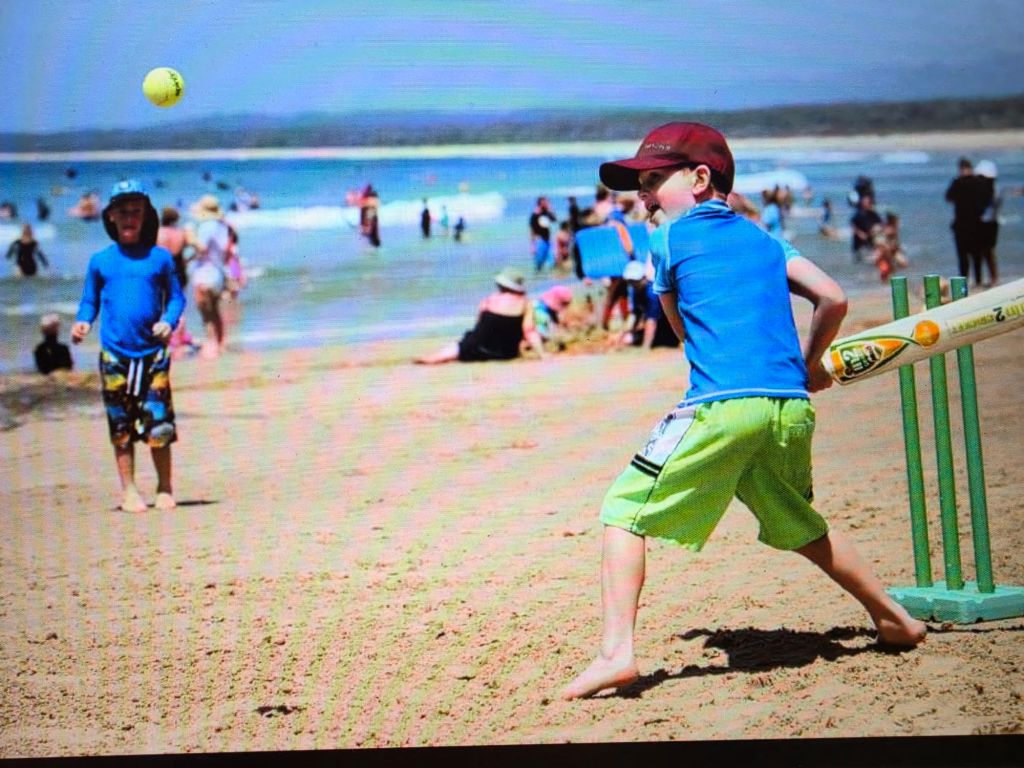
One of the iconic images of the great British seaside holiday of the fifties and sixties is of happy families playing beach cricket. Everyone joined in, playing with children’s bats, balls and stumps that reduced fathers who fancied themselves as Dexter or Sobers (Kohli or Archer to younger readers) to the same level of competence as their seven year old sons, non-sporting wives, grandfathers with knee replacements and even the family dog (when they were still allowed on the beach between May and September).
Sadly, the advent of the foreign package holiday, breakdown in traditional family structures and expansion of alternative leisure pursuits, all contrived to render such a scene virtually obsolete. Nearly fifteen years ago now, I embarked upon a one man campaign to revive this venerable but floundering tradition, pitching up on Ramsgate Main Sands with my wife at 2pm on a Sunday for an impromptu game.
I say impromptu because my planning had left something to be desired – a brief glance at the tide times beforehand would have revealed that this was the worst time of the day to start. Nevertheless, after twenty minutes inspecting the rapidly diminishing slither of sand along the bay, I found a strip that was marginally more playable than a Brisbane “sticky wicket” (one for the Boomers). It quickly became apparent, however, that if the game was to be remotely watchable, or attract other participants, it was pointless bowling anything other than full tosses because once the ball had pitched, it was firmly plugged into the sand.
Pudding-like wicket aside, it proved a batsman’s paradise as the leg side boundary shortened sharply with the onrushing scum brown tide, ensuring that the merest of flicks resulted in a boundary. That said, the smacking of my extra cover drives against the sea wall was more satisfying. Frank Keating once wrote that Ian Botham played a net “as if he is on Weston-super-Mare beach and the tide is coming in fast”. I’d like to think that if you substituted Ramsgate for its west country counterpart, that might accurately describe my batting on that day.
Public interest was initially negligible, evidenced by a succession of families, oblivious of the sacred nature of my work, plodding across the wicket at regular intervals, occasioning annoying and unaffordable interruptions in play. It reminded me of my primary school football pitch which had a concrete public footpath running diagonally across it, constantly trodden by young mothers with prams during vital matches against our bitter rivals from the adjoining parishes of Luton, Delce and Arden.
Understandably, dribbling was a skill particularly valued at Glencoe Road.
But back to the summer game.
Human indifference was not mirrored in the reaction of the indigenous avian population. An improbable infield of gulls occupied first slip, backward square leg and silly mid on, loitered, more, I suspect, in anticipation of the next tasty titbit thrown up by the thrashing waves than hovering in hope of a bat pad. Their noisy sledging would have done justice to any Australian test team in history. Eventually, with the wicket completely submerged, the players were forced to dash from the square to the nearest ice cream van.
Undaunted, I resumed my missionary work two days later with a game on the much larger and more suitable Viking Bay beach in Broadstairs. Low tide was scheduled for 2.04pm but, conscious that the tide came in a lot quicker than it went out, I decided that play should get underway an hour earlier.
A prompt inspection of prospective wickets revealed not only a soft, dune-like sand texture inconducive to a meaningful contest, but also an unmanageable abundance of people, deckchairs, windbreaks and bouncy castles, along with the ubiquitous volleyball court, populated by hordes of young Latino youths, compelling me to cancel plans to play there.
However, we rounded the bend at the end of the beach to enter Louisa Bay which, a full hour before the scheduled start of play, sported a vast expanse of dark, compacted sand. It was also devoid of spectators.
My excitement was intensified by the sight of TWO sets of wickets already pitched further along the beach. This was promising. Our game got underway and soon acted as a magnet for every bored child (this was before social media got its insidious claws into them) within three hundred metres. I was assailed with questions such as “can I play?” and “can my brother / sister join in?” (only the absence of the suffix “mister” reminded me I had not been transported back to 1959) – music to my ears as I suddenly found I was setting fields for TEN kids of assorted ages and having to remember in what order they all batted and bowled to avert tears.
The majority exuded more willing than competence, all wanting to field at mid wicket for some unaccountable reason (maybe the proximity of the tea hut and toilets had something to do with that), but uncomplainingly scurrying after every ball, regardless of how far and in what direction it had been despatched. Falling into a rock pool or getting entangled in the profusion of seaweed were no barriers to their enthusiasm.
On a more serious note, it was heartening to discover that you could still play an innocent game in public with a group of children that you had never met before, without being accused of wanting to take salacious photographs of or, worse still, interfere with, them. In fact, the parents seemed content to allow them to play, even the mother who was called upon to console her ten year old when he retired hurt after being struck on the left thigh by one of my rising eighty mile per hour inswingers.
The most poignant moment arose when one small boy advised me, with evident pride, and in hushed tones, that the reason his brother was scoring so freely with quasi-classical strokeplay and bowling off a run up that appeared to start just to the left of the Goodwin Sands, was because “he PLAYS cricket”, as if it were an arcane and ancient pastime.
The game lasted nearly three hours, interrupted only by obligatory lunch and tea intervals, dictated more by my need for regular rest than by the tyranny of the clock. Each succeeding resumption of play appeared to draw even more players until the relentless waves washed the wicket away completely.
So beach cricket is alive and flourishing in the cradle of the game, not quite the High Weald, but still in God’s own county. It can be no coincidence that shortly after this pilgrimage, I moved to Folkestone which boasts one of the firmest wickets on the coast at Sunny Sands.
Talk given to the Folkestone is a Library: The Power of Reading Together” event at the Quarterhouse in Folkestone on Thursday 7th May 2026.
Thank you, Sophie and the team for inviting me to talk this evening. I am thrilled to be associated with this exciting project.
I had contemplated showing a series of slides, but after 30 years of delivering Powerpoint and similar presentations, I thought I would stick to just talking to my subject this evening.
After all, if the King can talk for 37 minutes without visual aids, I’m sure I can manage 10.
………………………………….
I moved to Folkestone (not quite from London) almost 10 years ago and have watched its reputation as a major arts destination grow exponentially.
But I have always felt that literature was the poor relation in the local creative scene, despite the outstanding work done by Poets’ Corner, Write by the Sea and many other groups and individuals.
I started the walks in 2017, focusing initially on The Leas, Creative Quarter and the Harbour and Seafront.
In the following years I added tours of the East Cliff, West End, Bayle, Sandgate and even the Town Centre (as part of the Levelling Up initiative) as well as those themed on Art, Literature and the town’s rock and roll heritage.
I should take this opportunity to put in a plug for the next free rock and roll tour this coming Saturday as part of the Music in May programme. Join me at 10.30am in Noel’s Yard aka Market Square for 2 hours exploring the blue plaques, Wall of Fame and reliving concerts and other events related to those.
………………………………..
But back to the literary tours.
Prior to researching Folkestone’s literary history, I was certainly conscious of H.G. Wells’ close connection to the area, and being from Rochester, of Dickens’s affinity with the town (far greater I might add then Broadstairs with whom he is more often linked), but little else.
I subsequently learnt that not only has Folkestone been the birthplace of a host of writers, but for the past 183 years since the coming of the railway, it has welcomed many others en route to and from the Continent, some of whom have left their observations on the town.
On the tours you will encounter both.
………………………………
I didn’t realise, for instance, that one of my favourite writers, a Nobel Prize winner no less as well as the only one ever to play first class cricket, actually spent 2 weeks here in 1961. I suspect many of you know to whom I’m referring – but if you don’t, I’m not going to tell you now – you’ll need to come on a tour!
………………………………
So, what do the tours entail?
We meet at the Step Short Arch and weave our way through the town via Albion Villas, the parish church, the Bayle, Old High Street, Harbour and Harbour Station and along the seafront to the Zig Zag Path where we return to the Leas.
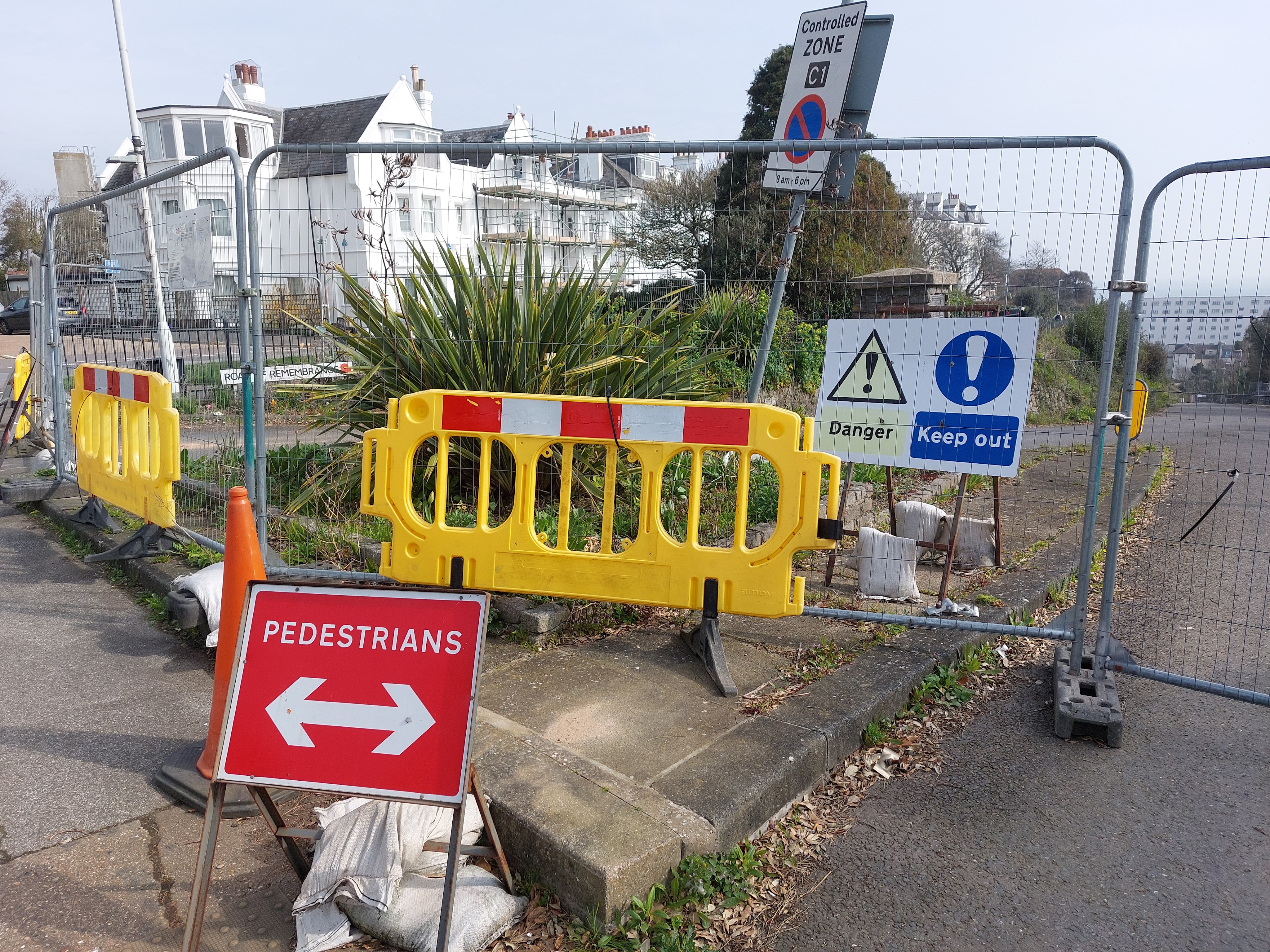
If nobody is looking, we might also sneak a peek at the Road of Remembrance! And if you have the stamina, we can walk through to Sandgate, where Wells lived for almost a decade, before returning to the starting point.
Along the route, we make regular stops where I read relevant extracts from writers associated with that particular location. The latest author count is 12, though I am always looking for additional material.
The reopening of the library, at least at its temporary home, in Sandgate Road on 26th of this month, will be a great help in that process.
………………………………..
The tours take around three hours (more like four hours if we extend it via Sandgate), with a short break or two included, and cost just £10 per person.
Whilst I will be running many other tours over the summer, I have set aside a series of dates, initially in May and June, which are listed in a pack of handouts you can collect later this evening.
I have also negotiated a free tour for Creative Folkestone members on 12th June.
………………………………….
I’ll leave you with 3 short quotes that I cover on the tours to provide you with some flavour of what they entail.
The first is from Charles Dickens and describes the impact of the tides on Folkestone Harbour, and I think you’ll agree, he could have written it today.
I should first explain that Dickens christened Folkestone Pavilionstone in honour of the Royal Pavilion Hotel, which stood on the site now occupied by the Grand Burstin.
I wonder if, a hundred years or now, a famous writer will christen Folkestone “Burstinstone” in their work!
Dickens wrote: “We are a tidal harbour at Pavilionstone. At low water, we are a heap of mud, with an empty channel in it where a couple of men in big boots always shovel and scoop: with what exact object, I am unable to say.
At that time, all the stranded fishing-boats turn over on their sides, as if they were dead marine monsters; the colliers and other shipping stick disconsolate to the mud; the steamers look as if their white chimneys would never smoke more, and their red paddles never turn again, the green sea-slime and weed upon the rough stones at the entrance, seem records of obsolete high tides never more to flow; the flagstaff-halyards droop; the very little wooden lighthouse shrinks in the idle glare of the sun.
But, the moment the tide begins to make, the Pavilionstone Harbour begins to revive. It feels the breeze of the rising water before the water comes, and begins to flutter and stir. When the little shallow waves creep in, barely overlapping one another, the vanes at the mastheads wake, and become agitated. As the tide rises, the fishing-boats get into good spirits and dance, the flagstaff hoists a bright red flag, the steamboat smokes, cranes creak, horses and carriages dangle in the air, stray passengers and luggage appear.”
And it goes on.
…………………………………….
The second comes from Kipps. the novel by H.G. Wells which references many locations in Folkestone and beyond. This particular piece describes Kipps’ exciting Sunday exploits:
“On Sundays he was obliged to go to church once, and commonly he went twice, for there was nothing else to do. He sat in the free seats at the back; he was too shy to sing, and not always clever enough to keep his place in the Prayer-book, and he rarely listened to the sermon.
In the intervals between services he walked about Folkestone with an air of looking for something. Folkestone was not so interesting on Sundays as on week-days, because the shops were shut; but on the other hand, there was a sort of confusing brilliance along the front of The Leas in the afternoon…….
He would sometimes walk up and down The Leas between twenty and thirty times after supper, desiring much the courage to speak to some other person in the multitude similarly employed. Almost invariably he ended his Sunday footsore”.
…………………………………….
The final extract is from the late Robert Morley, actor and raconteur, who is likely to be more familiar to those in the room, like myself, of a certain age.
Morley spent much of his childhood in Folkestone due to ill health where he was constantly wheeled around in his sailor suit in a bath chair.
He claimed that “if there’s one thing young people lack today….it is Folkestone standards. It may well be what’s wrong with the country. No child brought up as I was in Folkestone and Kensington Gardens ever felt the need of a psychiatrist”.
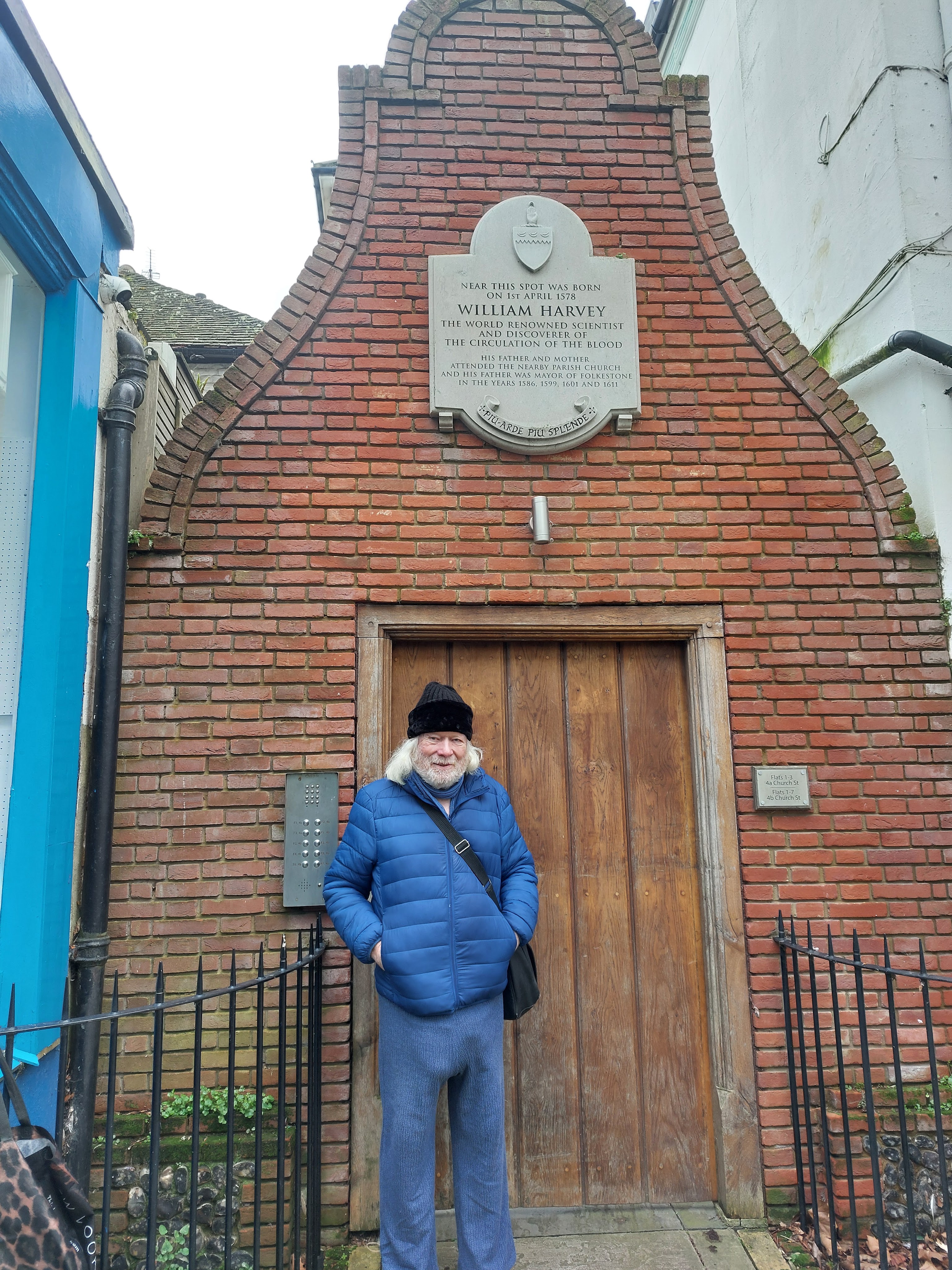
One of the most familiar figures in Folkestone town centre, with a shock of white hair sprouting out of his hat, and a bag of papers on his arm, is an octogenarian Irishman who reluctantly moved here in 1963 and never left.
The first time I met this man was shortly after I moved to the town in late 2016. I had decided to offer walking tours and was anxious to consult as many people as possible, not only to assess the interest in the project but also to tap into the experience of those who had previously done this.
The name that kept coming up as the best person to speak to was Eamonn Rooney, whom I was already aware of through buying some of his books on the history of the town.
But there was one snag – he was not the easiest person to track down as he was not on social media. But I managed to find him in his favourite coffee shop where he went every morning. He was sat in a corner of the restaurant with mug, pen, paper and books spread across the table.
And now, almost a decade later, I sat down with him again, in that very same cafe, on the eve of his 82nd birthday, to chat with him about his long association with Folkestone.
Born in Newry in 1944, spanning the counties of Armagh and Down, Eamonn was an average but lazy student. It was the influence of Mr O’Neill, his English teacher, and Mr McCourt, his Art teacher, that encouraged him to take his studies more seriously, though he was later told he “would never amount to anything” by the nuns who ran the school he attended in Belfast.
It was his parents who brought the name of Folkestone to his attention. So, in the spring of 1963, he took a trip, only intending to stay for a short while.
On arriving at Folkestone Central he was struck by the flower displays on roundabouts (after all, it was “Floral Folkestone”). He was impressed with The Leas (a “pleasant surprise”) and Kingsnorth Gardens (still a “hidden gem”).
His first encounter with a Folkestone “celebrity” occurred in the photocopy shop opposite Grace Hill Library. He started talking to American actress, singer (she starred in the long-running rock musical “Hair”), and mother of Mick Jagger’s son, Karis, Marsha Hunt, who was sending a fax (remember those?) to the USA. She said that she would never be able to remember his name, so christened him the “History Man”, and thereafter referred to him as that whenever they met, usually at the supermarket or Metropole jazz club.
On the recommendation of his brother who had just been demobbed from Shorncliffe, he took a summer job, but it was as a bus conductor that he first established himself in the town, and for which he is still fondly remembered. His route for 8 years primarily covered Cheriton, Morehall and the bus station and, as a result, the rest of the town remained largely an unknown quantity for him.
Time to buy a street map!
He had been told that Folkestone was primarily a Victorian town, so had “written off” the Bayle and the Old High Street as places of interest. But one day he met the watermills and windmills expert, C.P.Davies, whom he regards reverentially to this day as the preeminent local historian, who told him that there was “a lot of history” in Folkestone with a (buried) Roman Villa, significant Anglo-Saxon heritage, not to mention an extensive military history.
That was the moment when the “History Man” discovered his holy grail, starting a decades long love affair with the Heritage Room on the first floor of the Grace Hill Library. Eamonn was devastated when Davies retired shortly afterwards.
He also fondly remembers Amanda Oates of Shepway District Council who was responsible for organising events at the Lower Leas park Amphitheatre. Since she left, the facility has been sadly neglected.
The history research was all well and good, but he still had to earn a living. After being rejected by several Park Farm factories he was offered a job at FWM Plastics, followed by Silver Spring and Portex, for whom he worked for 15 years. It was during this time there that his writing career began with articles in the company’s Blue Line magazine and then the Portex and Folkestone camera clubs. And in 1985 he founded the local history society with Charles Whitney (chair), Alan Taylor and Peter Bamford.
In the early nineties, he took a three day a week job at the much lamented Martello No.3 visitor centre with an evening security role in the Leas Cliff Hall, followed by a winter job at the seafront car park. Between 1989 and 1996 he not only performed the role of town greeter but also delivered tours on behalf of the New Folkestone Society.
But it was in 1995 that the role for which most people remember him presented itself. Shepway Council had a vacancy at the Leas Lift, a position for which Eamonn’s undoubted customer facing skills made him ideally suited. When the council relinquished the lift in 2009, he was approached by the Folkestone Estate to take responsibility through a management agreement (CIC). With Terry Begent agreeing to handle all the business affairs, they formed a “dream team” until the lift closed in 2017, and it is a matter of great sadness to Eamonn that it remains closed (though, we hope, not for much longer).
Eamonn has more stories from his time as a tour guide than I have space for. One I particularly like is when he showed an American party into the British Lion pub, and as they were leaving, was asked “hey, buddy, aren’t we going to have what you Brits call a swift half before we go”? After the obligatory few drinks, Eamonn began to thank the group for joining the tour when the same guest enquired “hey, aren’t you going to finish the tour?”. Which, of course, like any self-respecting guide, he did.
Eamonn finds it remarkable that the young teenager who left Northern Ireland with no immediate prospects should meet an array of prominent individuals in his adopted town over the next sixty years. In addition to Marsha Hunt, these included Lord Radnor himself at his Wiltshire castle, Eastenders actress, Michelle Collins, whom he met at a BBC Wales interview, and Prince Harry at the opening of the Step Short Arch on the centenary of the outbreak if the Great War on 4th August 2014.
Eamonn has utilised his research to publish many books and pamphlets on Folkestone’s history, both on his own and in collaboration with others, notably Alan Taylor and Terry Begent. Asked which he was most proud of, he cited the history of the Belgian refugees at the outbreak of the Great War and the illustrations and text he provided for
John Rice’s Folkestone: A Photographic Record.
And the next? Probably Stuart Folkestone.
Whatever it might be, I for one will be buying it.